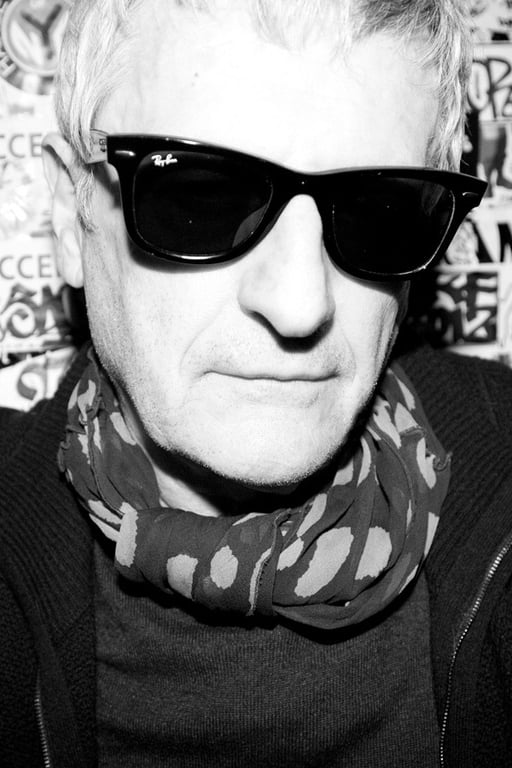
Michel Auder
Director · Soissons, Aisne, France
Michel Auder’s films, which span in length from five minutes to multiple hours, are all edited from the thousands of hours of footage the artist has casually shot throughout his life. Early on, Auder made a habit of carrying portable video-recording equipment on a daily basis, and so amassed a biographical reel that frequently captured his fellow artists in the New York art scene, including such personalities as Cindy Sherman, Larry Rivers, and, most famously, Alice Neel. Auder did not consider his practice to be factually driven, however: “It was not in any way a documentary, not to be related as truth. This work reflects my own feelings.” Auder’s approach to filming was largely inspired by Andy Warhol’s screen tests, and the experimental films of exponents of the French New Wave like Jean-Luc Godard.
Movies7
- Movie4.7Documentary
Homeo is a mental construction made from visual reality, just as music is made from auditive reality. I put in this film no personal intentions. All my intentions are personal. I’ve made this film thinking of what the audience would have liked to see, not something specific that I wanted to say: what the film depicts is above all reality, not fiction. Homeo is, for me, the search for an autonomous cinematographic language, which doesn't owe anything to traditional narrative, or maybe everything. Cinema is, above all, part of a way of life which will become more and more self-assured in the years and century to come. We are part of this change, and that’s why I tried in Homeo to establish a series of perpetual changes, in constant evolution or regress, which tries, above all, to focus on things.
Homeo
1967 · 7 votes
 Movie7.0Documentary
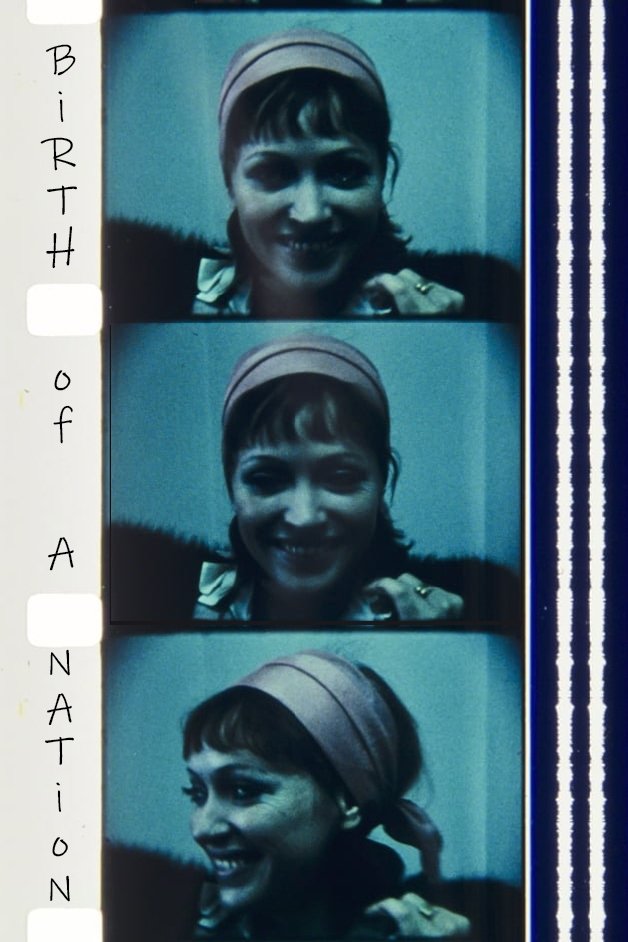
Jonas Mekas assembles 160 portraits, appearances, and fleeting sketches of underground and independent filmmakers captured between 1955 and 1996. Fast-paced and archival in spirit, the film celebrates the avant-garde as its own “nation of cinema,” a vital community existing outside the dominance of commercial film.
Birth of a Nation
1997 · 4 votes
 Movie6.6
“FUN AND GAMES (FOR EVERYONE): a pitch black and milky white film shot during one of Olivier Mosset's exhibition openings. A psychedelic game of improvisation joins the Zanzibar group with Salvador Dalí, Barbet Schroeder and Jean Mascolo... the solarized image reminiscent of thick strokes of a paintbrush.” - Philippe Azoury
Fun and Games for Everyone
1969 · 5 votes
- Movie10.0
The Chronicles capture the natural and cultural beauty of Morocco from its ancient walled villages to its nomadic caravans. Music comes from everywhere. Edited almost thirty years apart, the two Chronicles together are a study in Auder's approach to his memories. The footage is all from the same trip that was a family vacation. Considering Chronicles/Morocco, 1971 a construct of emotional convenience unfaithful to memory, Auder decided to supplement the first version with a fuller account. The two works feature almost entirely different footage. There are, however, sections where one can see where Auder has omitted Viva. The star of the 1971 version is a young Moroccan Adonis who appoints himself tour-guide for a group of Europeans including Michel. The camera follows his charming antics as he flaunts his nubile body and rather blunt but effective skills as a hunter.
Chronicles: Morocco
1972 · 1 votes
 Movie5.3Documentary
Documentary portrait of Henri Langlois, co-founder of the Cinémathèque Française.
Langlois
1970 · 3 votes
- Movie5.2Documentary
One of the very few films made by Etienne O'Leary, all of which emerged from the French underground circa 1968 and can be very loosely designated 'diary films.' Like the contemporaneous films by O'Leary's more famous friend Pierre Clementi, they trippily document the drug-drenched hedonism of that era's dandies. O'Leary worked with an intoxicating style that foregrounded rapid and even subliminal cutting, dense layering of superimposed images and a spontaneous notebook type shooting style. Yet even if much of O'Leary's material was initially 'diaristic,' depicting the friends, lovers, and places that he encountered in his private life, the metamorphoses it underwent during editing transformed it into a series of ambiguously fictionalized, sometimes darkly sexual fantasias. - Experimental Film Club
Chromo sud
1968 · 6 votes
 Movie8.0Documentary
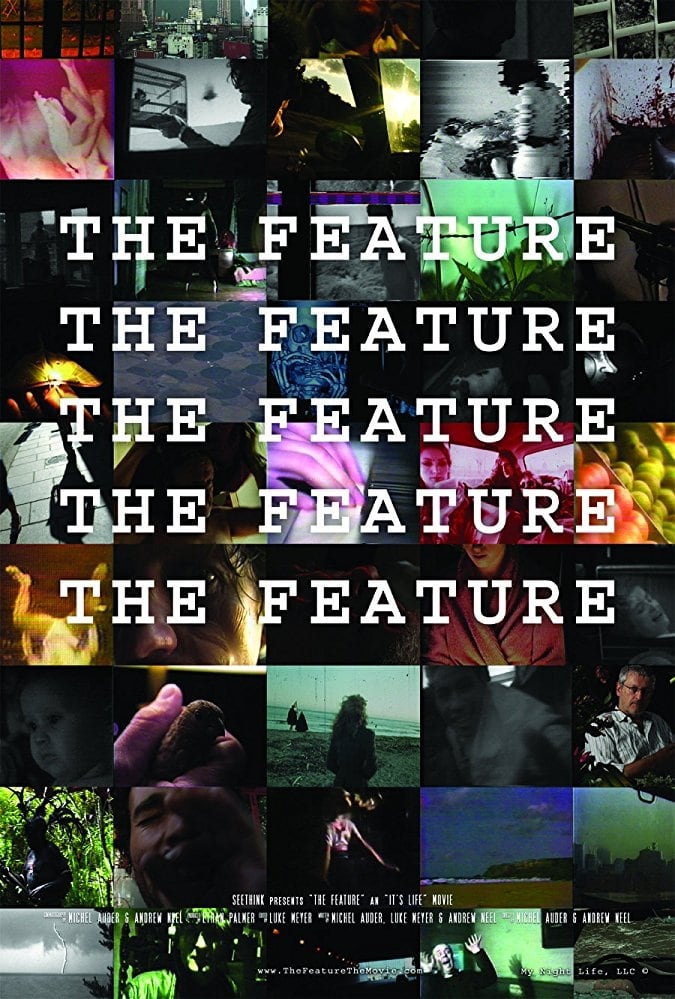
The Feature does not reconcile fact and fiction; instead, it blurs the definitions seemingly represented by the film’s two clearly demarcated registers: that of the archival footage and that of the new, theatrical material. In his guise as “Michel Auder,” living a fulsome and extravagant life, replete with beautiful women and a rock-cut pool overlooking Los Angeles, the art world is revealed as a sham, and his character exhibits a repulsive narcissism. And yet, when caught in quiet moments, something poignant emerges—a glimmer of truth that rebels against the entire endeavour. Or maybe, that’s what makes The Feature.
The Feature
2008 · 1 votes