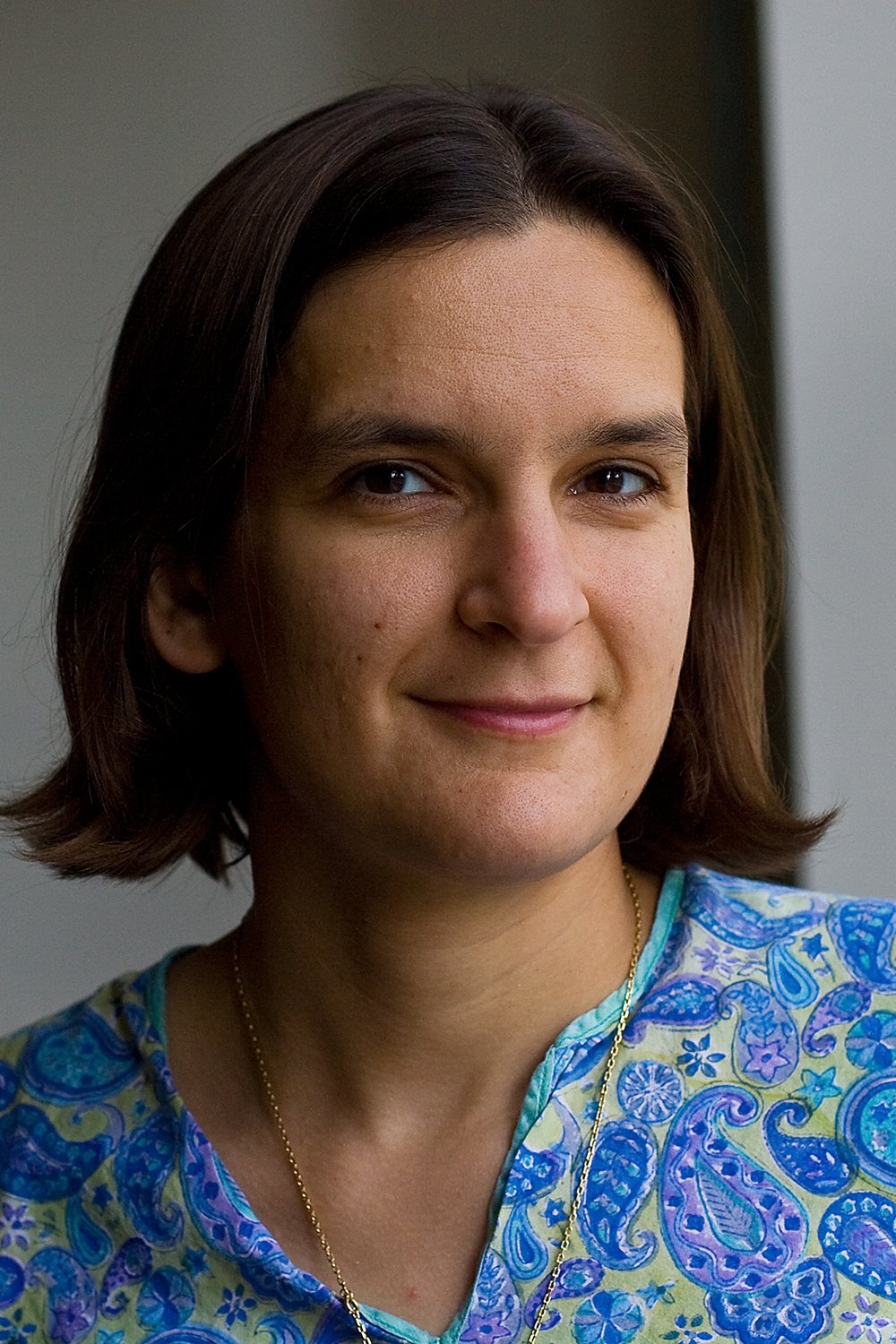
Esther Duflo
Actor · b. 1972 · Paris, France
Esther Duflo Banerjee, FBA (born 25 October 1972) is a French–American economist who is a professor of Poverty Alleviation and Development Economics at the Massachusetts Institute of Technology (MIT). She is the co-founder and co-director of the Abdul Latif Jameel Poverty Action Lab (J-PAL), which was established in 2003. She shared the 2019 Nobel Memorial Prize in Economic Sciences with Abhijit Banerjee and Michael Kremer, "for their experimental approach to alleviating global poverty". Duflo is a National Bureau of Economic Research (NBER) research associate, a board member of the Bureau for Research and Economic Analysis of Development (BREAD), and director of the Centre for Economic Policy Research's development economics program. Her research focuses on microeconomic issues in developing countries, including household behavior, education, access to finance, health, and policy evaluation. Together with Abhijit Banerjee, Dean Karlan, Michael Kremer, John A. List, and Sendhil Mullainathan, she has been a driving force in advancing field experiments as an important methodology to discover causal relationships in economics. Together with Abhijit Banerjee, she wrote Poor Economics and Good Economics for Hard Times, published in April 2011 and November 2019, respectively. According to the Open Syllabus Project, Duflo is the seventh most frequently cited author on college syllabi for economics courses. Duflo was born in 1972 in Paris, the daughter of pediatrician Violaine Duflo and mathematics professor Michel Duflo. During Duflo's childhood, her mother often participated in medical humanitarian projects. After studying in the B/L program of Lycée Henri-IV's Classes préparatoires, Duflo began her undergraduate studies at École normale supérieure in Paris, planning to study history, her interest since childhood. In her second year, she began considering a career in the civil service or politics. She spent ten months in Moscow starting in 1993. She taught French and worked on a history thesis that described how the Soviet Union "had used the big construction sites, like the Stalingrad tractor factory, for propaganda, and how propaganda requirements changed the actual shape of the projects." In Moscow, she also worked as a research assistant for a French economist connected to the Central Bank of Russia and, separately, for Jeffrey Sachs, an American economist who was advising the Russian Minister of Finance. The experiences at these research posts led her to conclude that "economics had potential as a lever of action in the world" and she could satisfy academic ambitions while doing "things that mattered". ... Source: Article "Esther Duflo" from Wikipedia in English, licensed under CC-BY-SA 3.0.
Series3
 TV5.2Talk ShowDocumentary
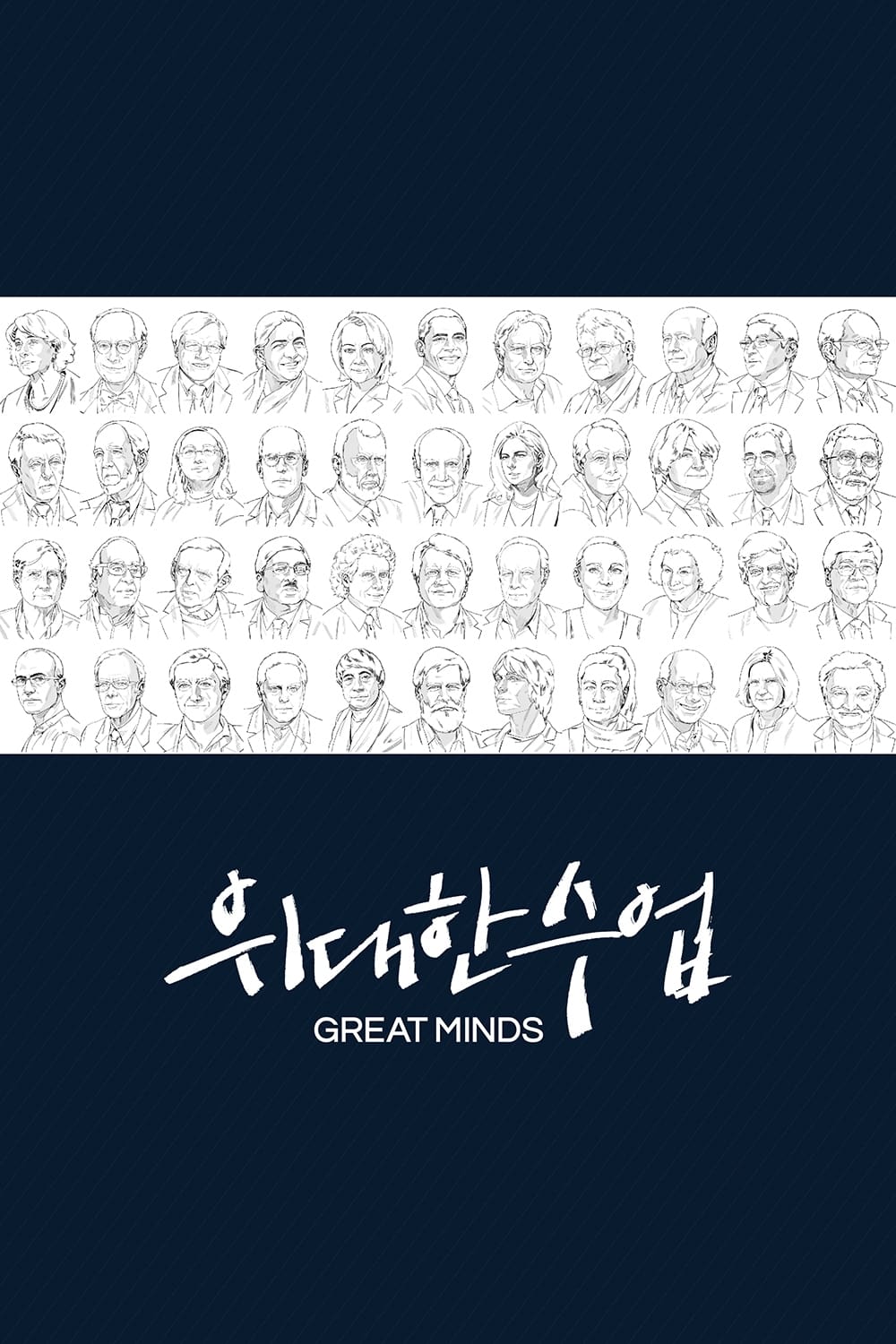
A current affairs program that began airing on EBS in August 2021. Co-produced by the Ministry of Education, the National Institute for Lifelong Learning, and EBS, the program is part of the Korean MOOC (Korean Massive Open Online Course) program, which aims to disseminate world-class knowledge to the public amid the prolonged COVID-19 pandemic, which has widened the knowledge gap between classes and spread fake information on social media. Hear great thoughts from some of the world's leading minds right now, including Nobel Prize-winning economist Paul Krugman, Michael Sandel of What is Justice, and world-renowned conductor and pianist Daniel Barenboim.
 TV5.8News
Télématin is a French breakfast television news show, broadcast on France 2 since January 7, 1985. It is broadcast in Metropolitan France weekdays from 6:30 to 9:00 am CET. TV5 broadcast the show in Canada in its entirety until September 2011: it now shows a 90 minute version between 6:30 and 8:00 am Eastern Time, when the French original version is now 2h30 long. Télématin is hosted by William Leymergie. The show is daily seen by around 40% of the French morning audience, a very high percentage for French TV. In Metropolitan France, the newscasts are presented at 7:00, 7:30 and 8:00, with newsflashes at 6:30 and 8:50, and two press reviews at 7:20 and 8:30. The 6:30, 7:30 and 8:50 newscasts are usually presented by a female reader and the hourly newscasts by a male. The usual readers are Nathanaël de Rinquesen, Sophie Le Saint, Julien Benedetto, Sophie Gastrain, Patrice Romedenne and Frédéric Vion.
Télématin
1985 · 2 votes
 TV8.3Documentary
NANO searches for the latest research findings and provides up-to-date scientific background information.
Nano - Die Welt von morgen
2000 · 3 votes