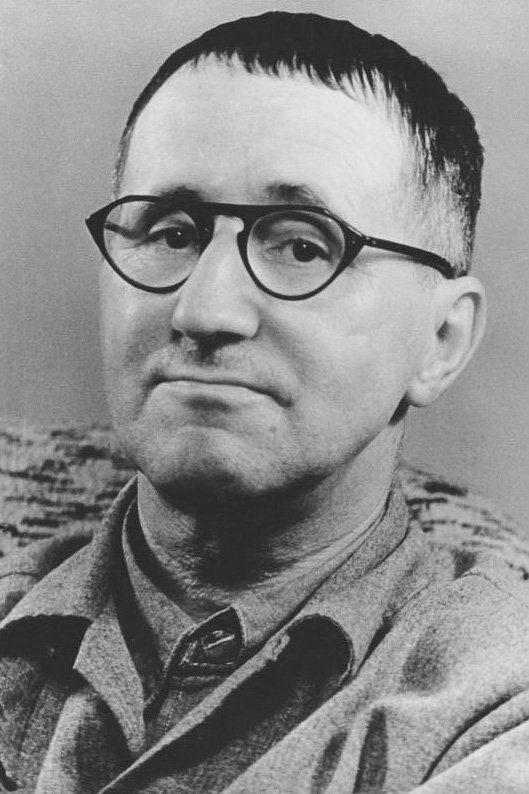
Bertolt Brecht
Writer · 1898 – 1956 · Augsburg, Germany
Eugen Berthold Friedrich Brecht (10 February 1898 – 14 August 1956), known as Bertolt Brecht and Bert Brecht, was a German theatre practitioner, playwright, and poet. Coming of age during the Weimar Republic, he had his first successes as a playwright in Munich and moved to Berlin in 1924, where he wrote The Threepenny Opera with Elisabeth Hauptmann and Kurt Weill and began a lifelong collaboration with the composer Hanns Eisler. Immersed in Marxist thought during this period, Brecht wrote didactic Lehrstücke and became a leading theoretician of epic theatre (which he later preferred to call "dialectical theatre") and the Verfremdungseffekt. When the Nazis came to power in Germany in 1933, Brecht fled his home country, initially to Scandinavia. During World War II he moved to Southern California, where he established himself as a screenwriter while being surveilled by the FBI. In 1947, he was part of the first group of Hollywood film artists to be subpoenaed by the House Un-American Activities Committee for alleged Communist Party affiliations. The day after testifying, he returned to Europe, eventually settling in East Berlin, where he co-founded the theatre company Berliner Ensemble with his wife and long-time collaborator, actress Helene Weigel. Description above from the Wikipedia article Bertolt Brecht, licensed under CC-BY-SA, full list of contributors on Wikipedia.
Movies5
 MovieDocumentary
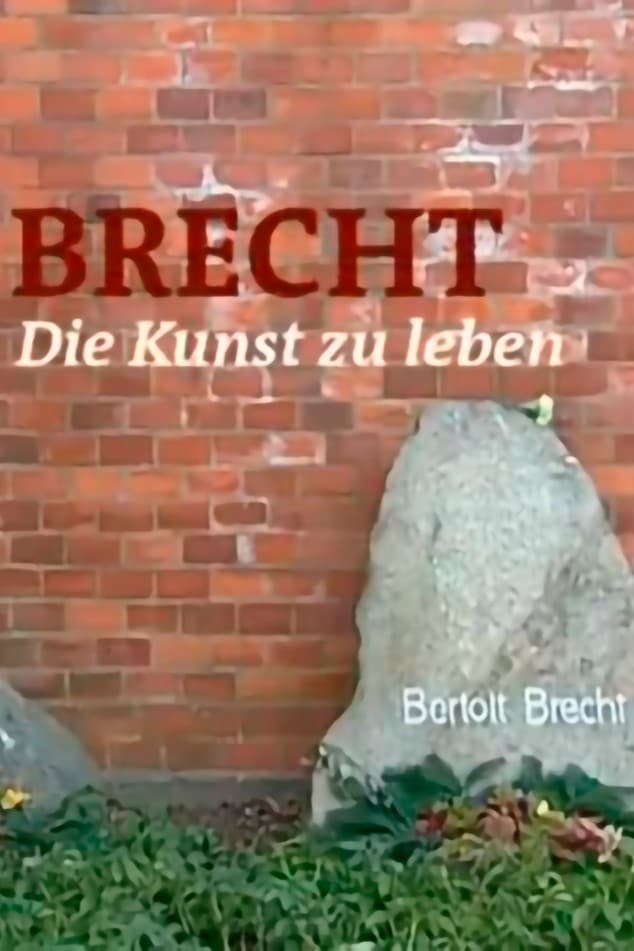
He wanted to revolutionize theater practice and at the same time social awareness: Today Brecht, who was born in Augsburg in 1898 and died in East Berlin in 1956, is one of the most important playwrights of the 20th century.
 Movie6.2Documentary
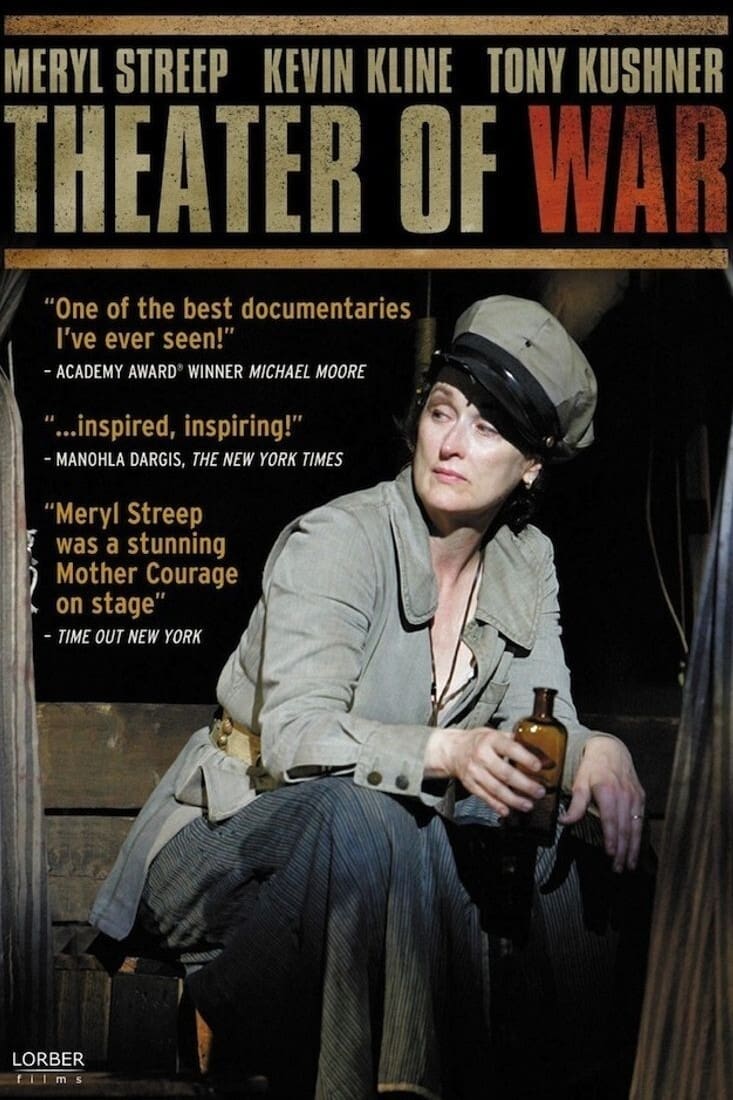
A behind-the-scenes look at The Public Theater's production of Bertolt Brecht's "Mother Courage" that examines the playwright's life and ideas.
Theater of War
2008 · 4 votes
- MovieDocumentary
"Cause of Death Unknown" - Carola Neher (1900-1942) actress, singer and feminist. Brecht wrote the role Polly Peachum for her. She practiced boxing with Marlene Dietrich. After Hitler seized power, thousands of German communists and anti-fascists fled to the Soviet Union, the "fatherland of the working people". The tragedy of German communism is that the vast majority of them perished or were lost during Stalin's "cleansing". Carola Neher is one of the fate figures of that time. In the 20s, she belonged to the narrow circle of Brecht actresses. The film accompanies her son Georg Becker in search of his mother's traces in the sinking Soviet Union.
 Movie
Movie- MovieDocumentary
Archive footage of bomb detonations during the Second World War combined with abstract graphic elements which show the destructive potential of modern nuclear missiles. Together the images are a silent warning of armament and war.
Series3
 TV5.3Drama
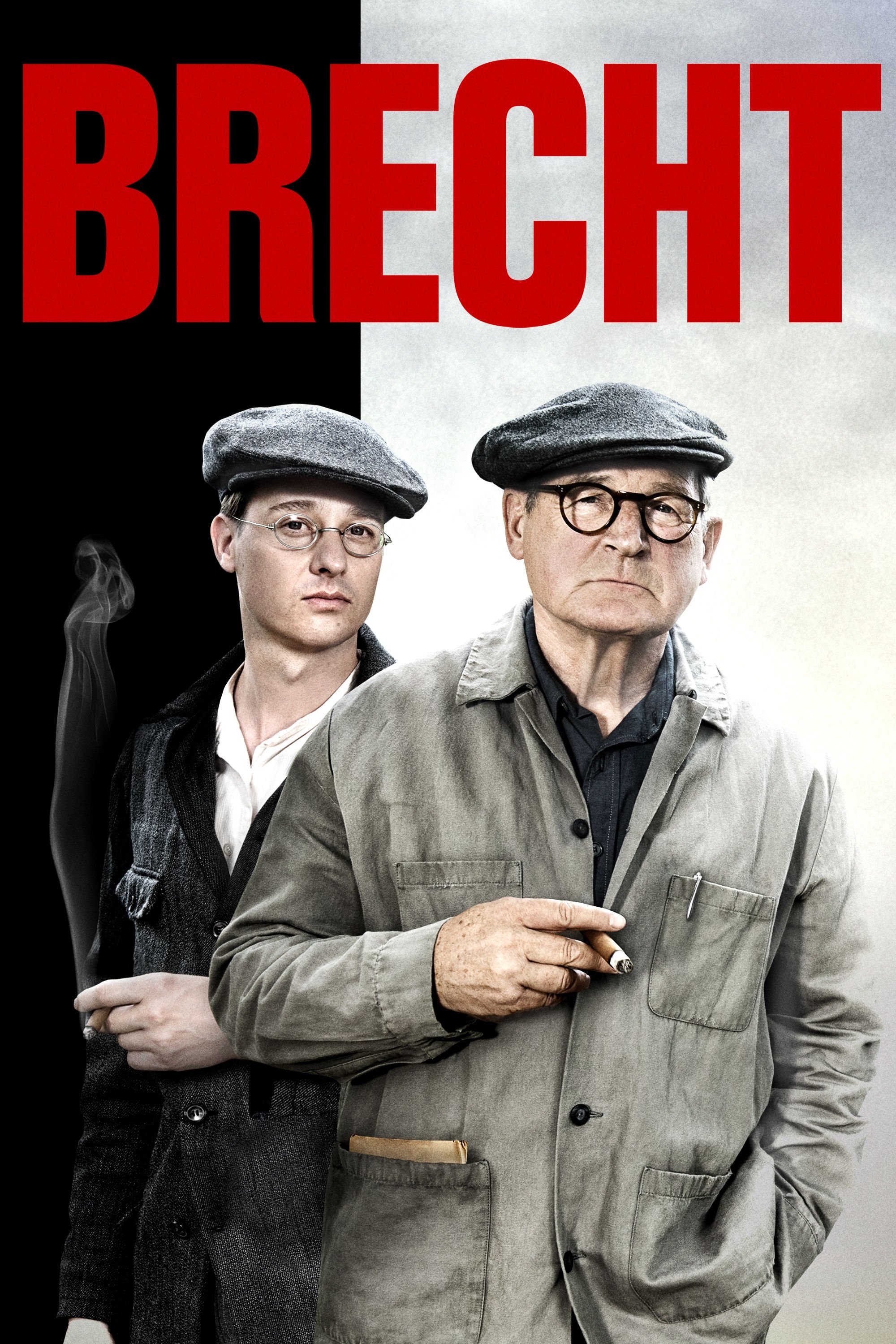
East Berlin, 1956. Bertolt Brecht, revolutionary of the theater and poet of the state, looks back: his exploits as a teenager during the World War I; his romantic adventures during the twenties; the escape of the Nazi regime; the return from exile. The life of a timeless classic, a class fighter, an indefatigable free spirit, a committed artist.
Brecht
2019 · 7 votes
 TV9.0Documentary
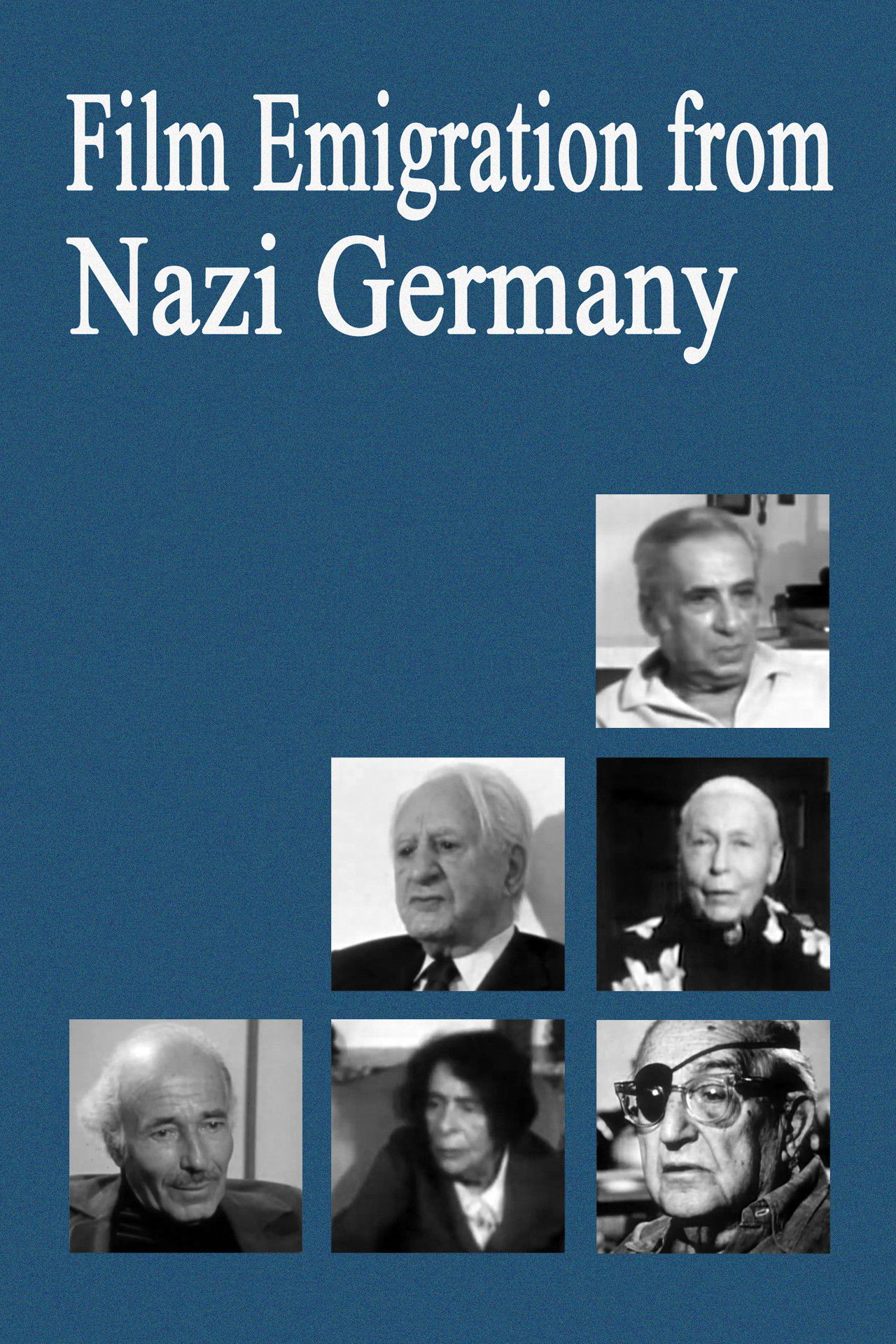
Based on extensive interviews, shot on 16mm in a series of static long takes, Filmemigration aus Nazideutschland, is one of the most fascinating examples of "Film history on film" ever produced. Straschek devoted years to researching the topic and accumulating both film and non-film materials. Apart from some radio features and articles, however, this 290-minute TV programme remains the only published trace of Straschek's lifelong work on the emigration of film personnel. He had intended to publish a three-volume book, encompassing all available data about 3,000 emigrants originating from the centre and peripheries of film production, but the book never materialised.
 TV9.0Documentary
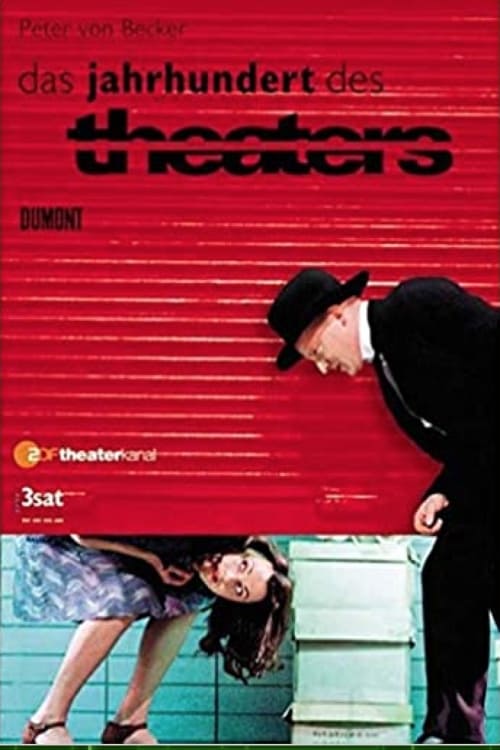
"The Century of the Theater" - From the "birth of the director" to the "heroes of modernity" - an overview of the world of theater - illuminates the interaction with the history of the past hundred years is also shown.
Das Jahrhundert des Theaters
2002 · 1 votes