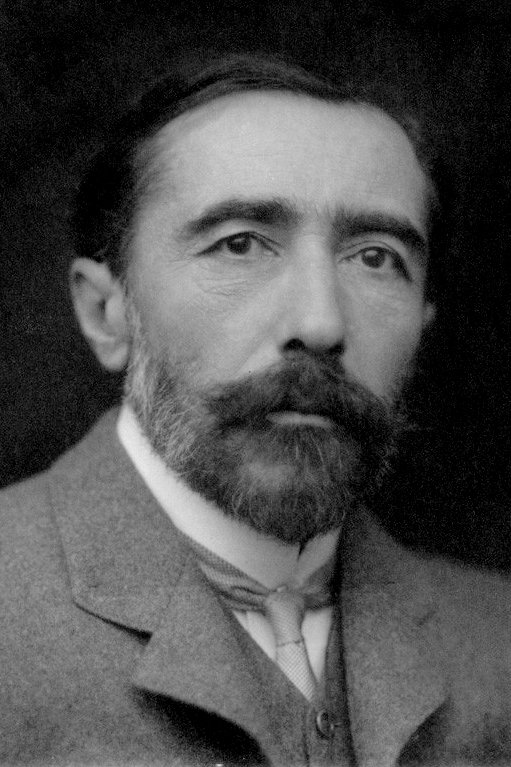
Joseph Conrad
Senarist · 1857 – 1924 · Berdichev, Kiev Governorate, Russian Empire [now Berdychiv, Zhytomyr Oblast, Ukraine]
Joseph Conrad (born Józef Teodor Konrad Korzeniowski; December 2, 1857 – August 3, 1924) was a Polish-born English novelist. Conrad is regarded as one of the greatest novelists in English, though he did not speak the language fluently until he was in his twenties (and then always with a marked Polish accent). He wrote stories and novels, predominantly with a nautical or seaboard setting, that depict trials of the human spirit by the demands of duty and honour. Conrad was a master prose stylist who brought a distinctly non-English tragic sensibility into English literature. While some of his works have a strain of romanticism, he is viewed as a precursor of modernist literature. Writing in the heyday of the British Empire, Conrad drew upon his experiences in the French and later the British Merchant Navy to create short stories and novels that reflect aspects of a worldwide empire while also plumbing the depths of the human soul. His narrative style and anti-heroic characters have influenced many authors. Films have been adapted from or inspired by Conrad's Victory, Lord Jim, The Secret Agent, An Outcast of the Islands, The Rover, The Shadow Line, The Duel, Heart of Darkness, Nostromo, Almayer's Folly.
Filmler2
 Film6.7Belgesel
The story of the insane scandals related to the remake of “Island of Dr. Moreau” —originally a novel by H. G. Wells—, which was brought to the big screen in 1996. How director Richard Stanley spent four years developing the project just to find an abrupt end to his work while leading actor Marlon Brando pulled the strings in the shadows. Now for the first time, the living key players recount what really happened and why it all went so spectacularly wrong.
 Film7.0Belgesel
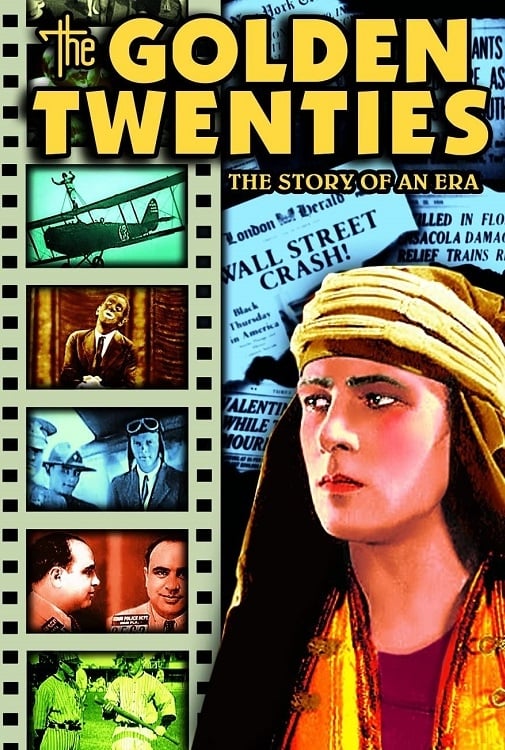
Feature-length compilation of 1920s newsreel footage, with commentary about news, sports, lifestyles, and historical figures.
The Golden Twenties
1950 · 1 votes
Diziler2
 Dizi7.2Belgesel
Arena is a British television documentary series, made and broadcast by the BBC. Voted by leading TV executives in Broadcast as one of the top 50 most influential programmes of all time, it has run since 1 October 1975 with over five hundred episodes made, directed by the likes of Martin Scorsese, Alan Yentob, Roly Keating, Frederick Baker, Volker Schlondorff and Vikram Jayanti. Arena's subjects are a roll-call of the world's best known cultural figures from the 20th and 21st centuries, from singers Bob Dylan and Amy Winehouse to academics Edward Said and Eric Hobsbawm, from writers Jean Genet and V S Naipaul to artists Francis Bacon and Louise Bourgeois. The current series editor is Anthony Wall.
Arena
1975 · 9 votes
 Dizi7.2Belgesel
Omnibus was an arts-based BBC television documentary series, broadcast mainly on BBC1 in the United Kingdom. The programme was the successor to the long-running arts-based series 'Monitor'. It ran from 1967 until 2003, usually being transmitted on Sunday evenings. During its 35-year history, the programme won 12 Bafta awards. Among the series' best remembered documentaries are Cracked Actor, a profile of David Bowie, and Rene Magritte, a graduate film by David Wheatley, 'Madonna: Behind the American dream', a film produced by Nadia Hagger, and a profile of the British film director Ridley Scott. For a season in 1982, the series was in a magazine format presented by Barry Norman. The series was replaced by 'Imagine' hosted by Alan Yentob.
Omnibus
1967 · 9 votes