Katja Specht
Oyuncu
Katja Specht is known for Mr. Kobin Seeks Adventure (1934), Um Freiheit und Liebe (1937) and Die unmögliche Frau (1936).
Filmler5
 Film10.0Dram
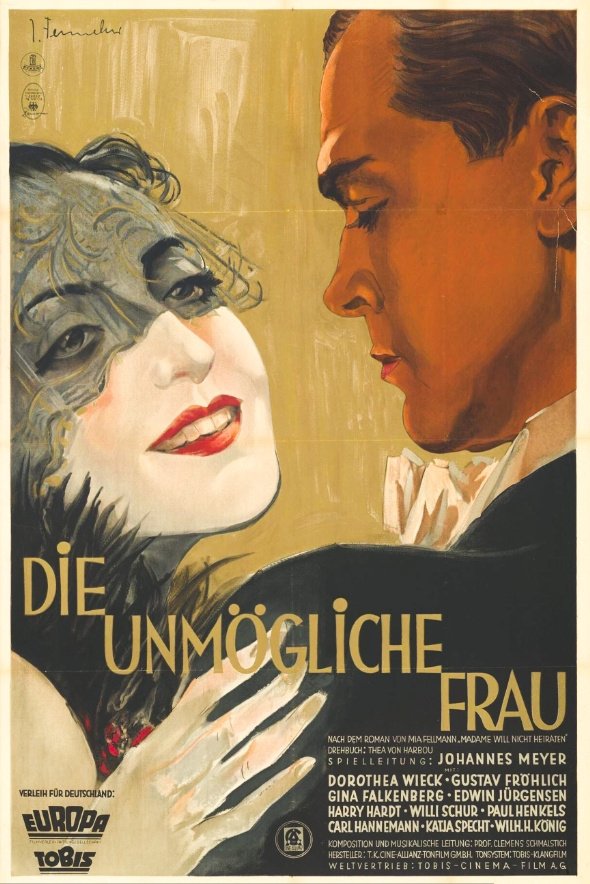
Die unmögliche Frau
1936 · 1 votes
 Film6.6Dram
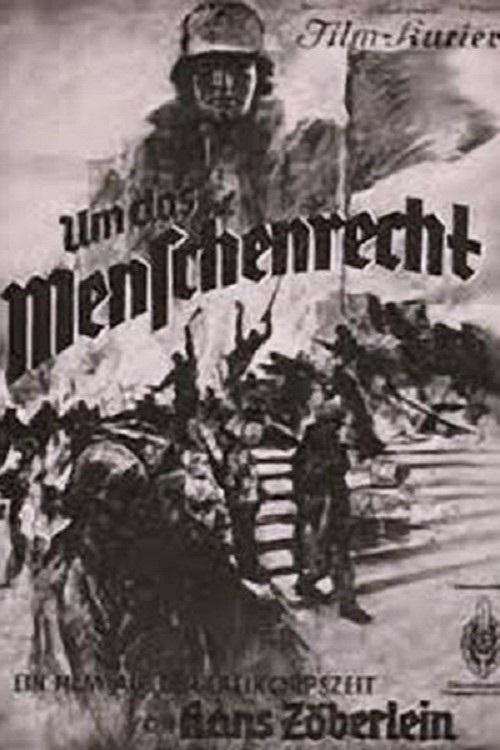
This Nazi propaganda film tells about the "freikorps" movement in post-World War I Germany. Freikorps were armed extreme-right-wing paramilitary groups, often composed of street thugs, ex-convicts and unemployed veterans, who engaged in street battles and assassinations of political opponents, usually leftist or Communist groups. Many of these "freikorps" were absorbed into the S.A. (Storm Troopers) and, later, the SS after Adolf Hitler came to power
 Film6.0KomediDram
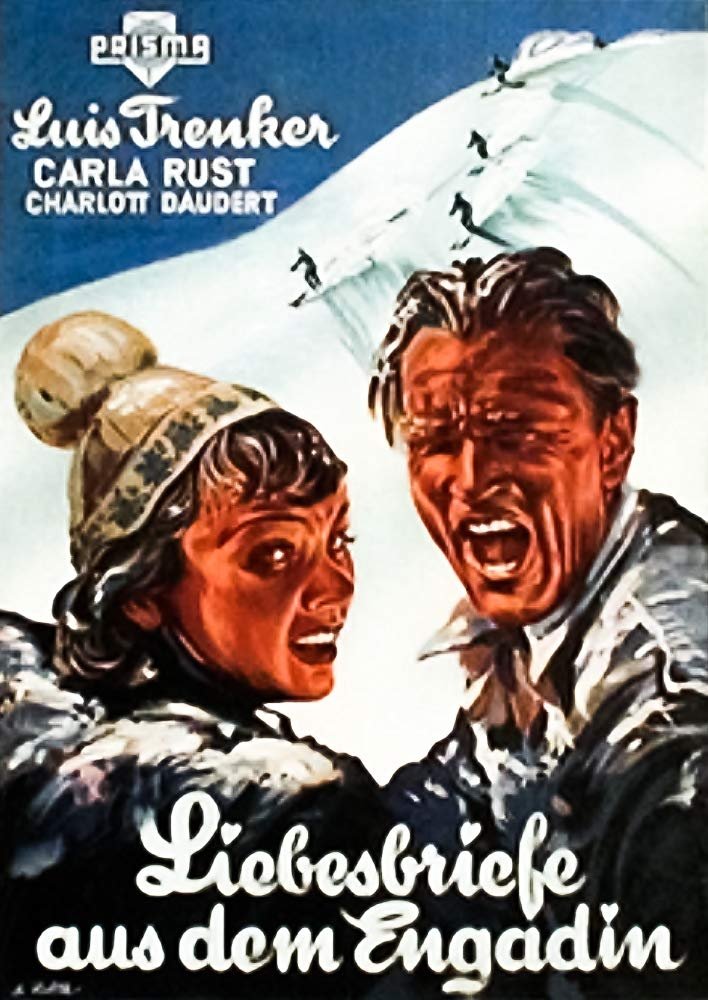
Constance, the young widow of a wealthy American, gets a love letter from the Engadine region, signed by the famous guide Toni Anewater she had met during a holiday in the previous year. Constanze and her friend Dorothy therefore go to Switzerland for winter sports. But identical love letters to other ladies in London, Paris and Rome have been sent. Toni does not know anything about the letters. Everything seems to be a cunning of the hotel owner to attract tourists.
 Film8.0Dram
At a ball at the Metropol, the married Margit gives a harmless kiss to a one-time friend from her childhood and cousin, Eberhard. The two notice, however, that Margit's ill and jealous husband observed them from a distance, because he recognized the coat she recently purchased. Quickly, Margit asks the salesgirl Trude to put on her coat and meet Eberhard in the lobby. Things take a decidedly different turn, however, when Trude and Eberhard fall madly in love with each other.
- Film8.0Dram
Considering Germany's own treatment of Poland in 1939, it is ironic in the extreme that the 1938 German film Um Freiheit und Liebe (For Freedom and Love) is a celebration of Poland's declaration of independence from Russia. Werner Hinz plays Konrad, an idealistic Polish student who courts disaster for his loved ones through his constant harrangues against Russian impression. When his mother promises the authorities that Konrad will cease his protests, he is honor bound to obey her, no matter what the provocation. Drowning his disappointment in liquor, Konrad falls in love with nightclub singer Anna Sasotska (Viktoria von Ballasko). While he never achieves his political goals, Konrad at least finds happiness romantically. The climax of the film is particularly exciting, even though it is motivated by anti-Russian (and implicitly pro-Nazi) propaganda.
Die Warschauer Zitadelle
1937 · 1 votes