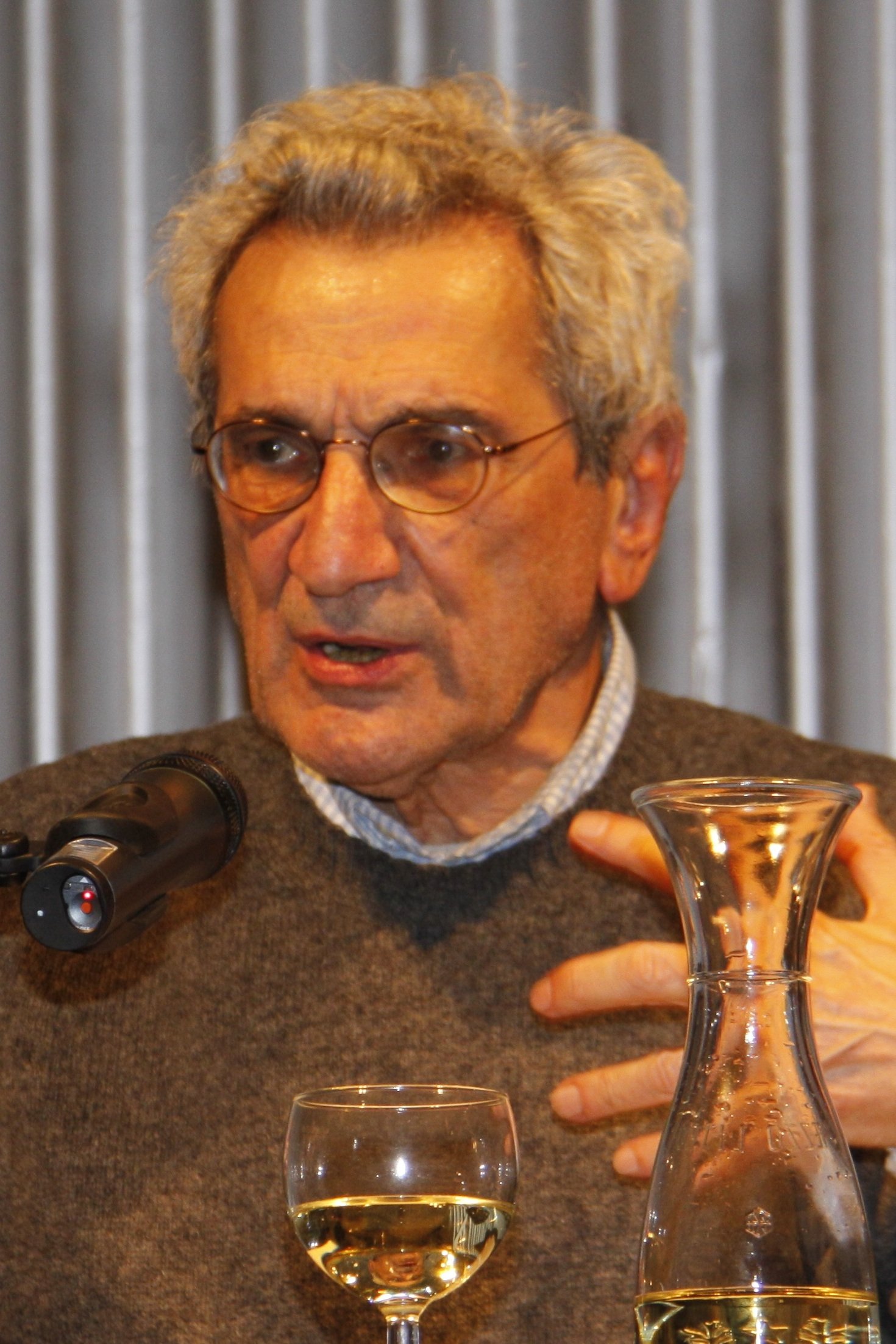
Toni Negri
Oyuncu · 1933 – 2023 · Padova, Veneto, Italy
Filmler5
 Film
FilmCan we imagine a world without borders, without the nation state and its monopoly on citizenship rights? In their third collaborative film Zanny Begg (Sydney) and Oliver Ressler (Vienna) focus on struggles to obtain citizenship, while at the same time questioning the implicitly exclusionary nature of this concept.
 FilmBelgesel
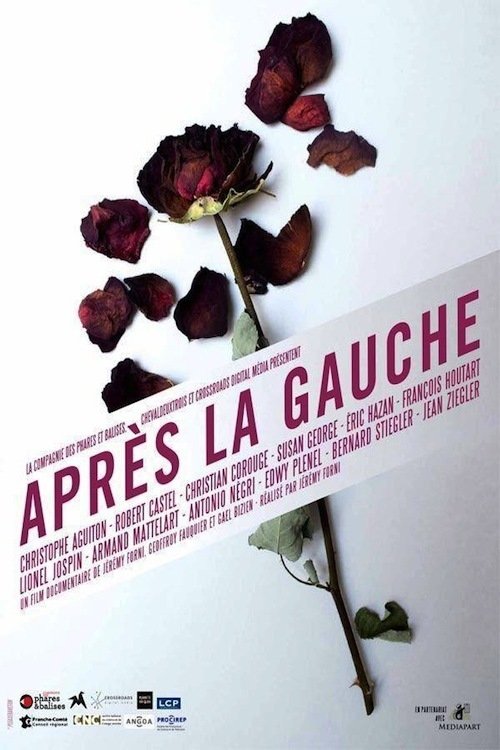
What does it mean to be leftist today? The film tries to answer this essential question by interviewing great figures of contemporary thought. From the disappearance of the USSR to the latest financial crisis, Après la gauche is a journey through 20 years that have upset the left, but it's - above all - an act of resistance.
Après la gauche
2011
 Film5.0Belgesel
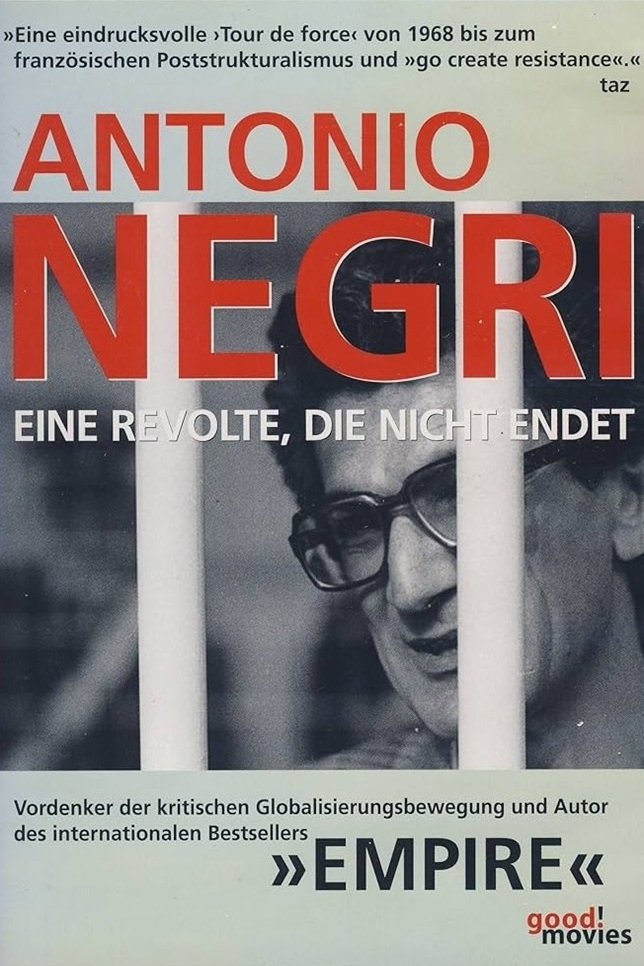
Few intellectuals have experienced as much admiration and hatred as Antonio Negri. His international best-selling book, Empire, a critical analysis of the new global economy coauthored with Michael Hardt, was hailed as a new manifesto for the 21st century, and turned Negri into a leading spokesperson for the international anti-globalization movement. Antonio Negri: A Revolt that Never Ends profiles the controversial life and times of this important moral and political philosopher, militant, prisoner, refugee, and so-called "enemy of the state." It traces his roots in the radical left-wing movements in Italy during the 60s and 70s, illustrated through incredible archival footage of strikes, factory occupations, terrorist actions, violent street confrontations, and government trials of dissidents. During these tumultuous decades Negri spent ten years in prison and fourteen years in Parisian exile, where he contributed to philosophical debates with authors such as Gilles Deleuze.
Antonio Negri: A Revolt That Never Ends
2004 · 1 votes
 Film6.2BelgeselAnimasyon
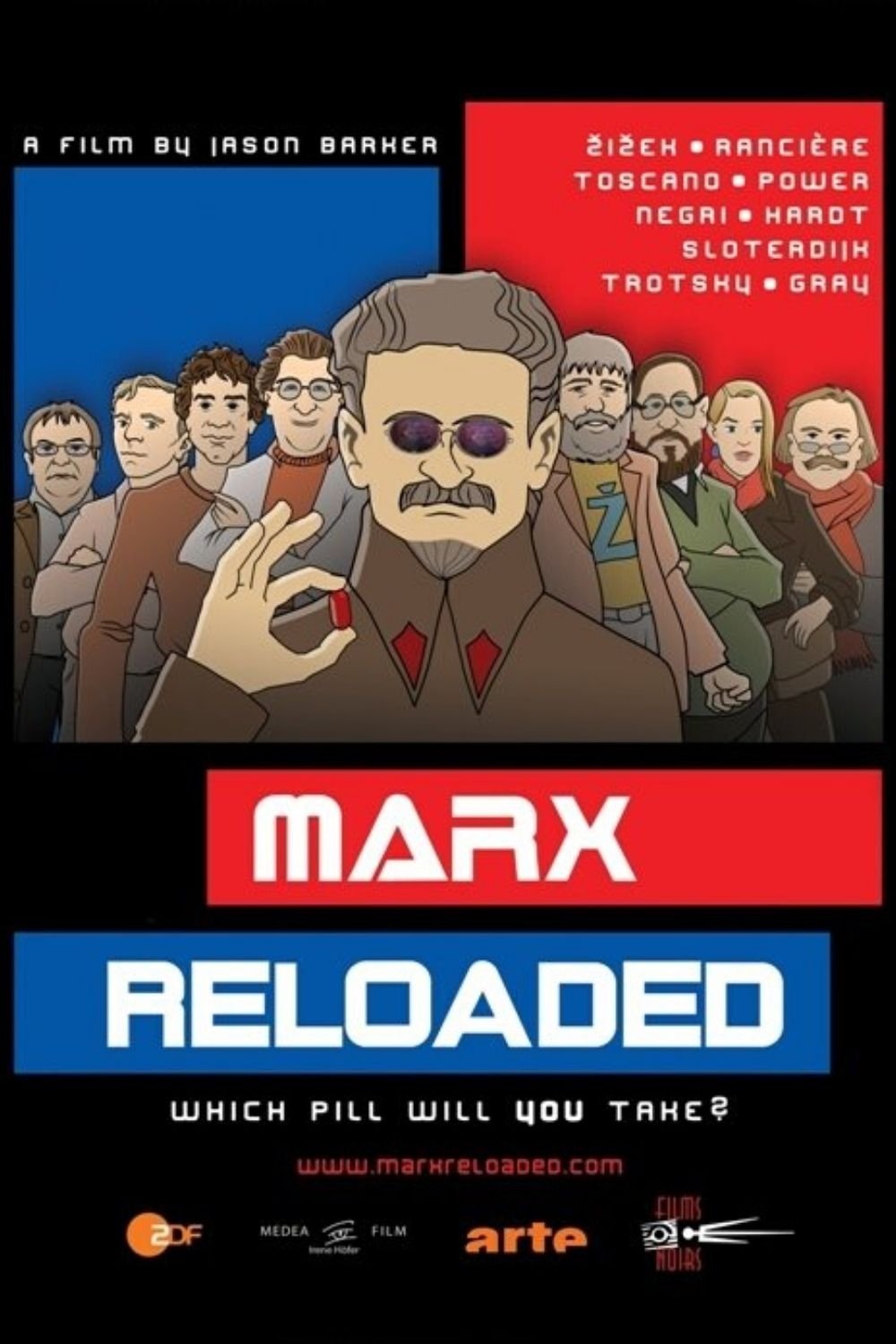
Marx Reloaded is a cultural documentary that examines the relevance of German socialist and philosopher Karl Marx's ideas for understanding the global economic and financial crisis of 2008-09. The crisis triggered the deepest global recession in 70 years and prompted the US government to spend more than 1 trillion dollars in order to rescue its banking system from collapse. Today the full implications of the crisis in Europe and around the world still remain unclear. Nevertheless, should we accept the crisis as an unfortunate side-effect of the free market? Or is there another explanation as to why it happened and its likely effects on our society, our economy and our whole way of life?
Marx Reloaded
2011 · 8 votes
 Film7.5Belgesel
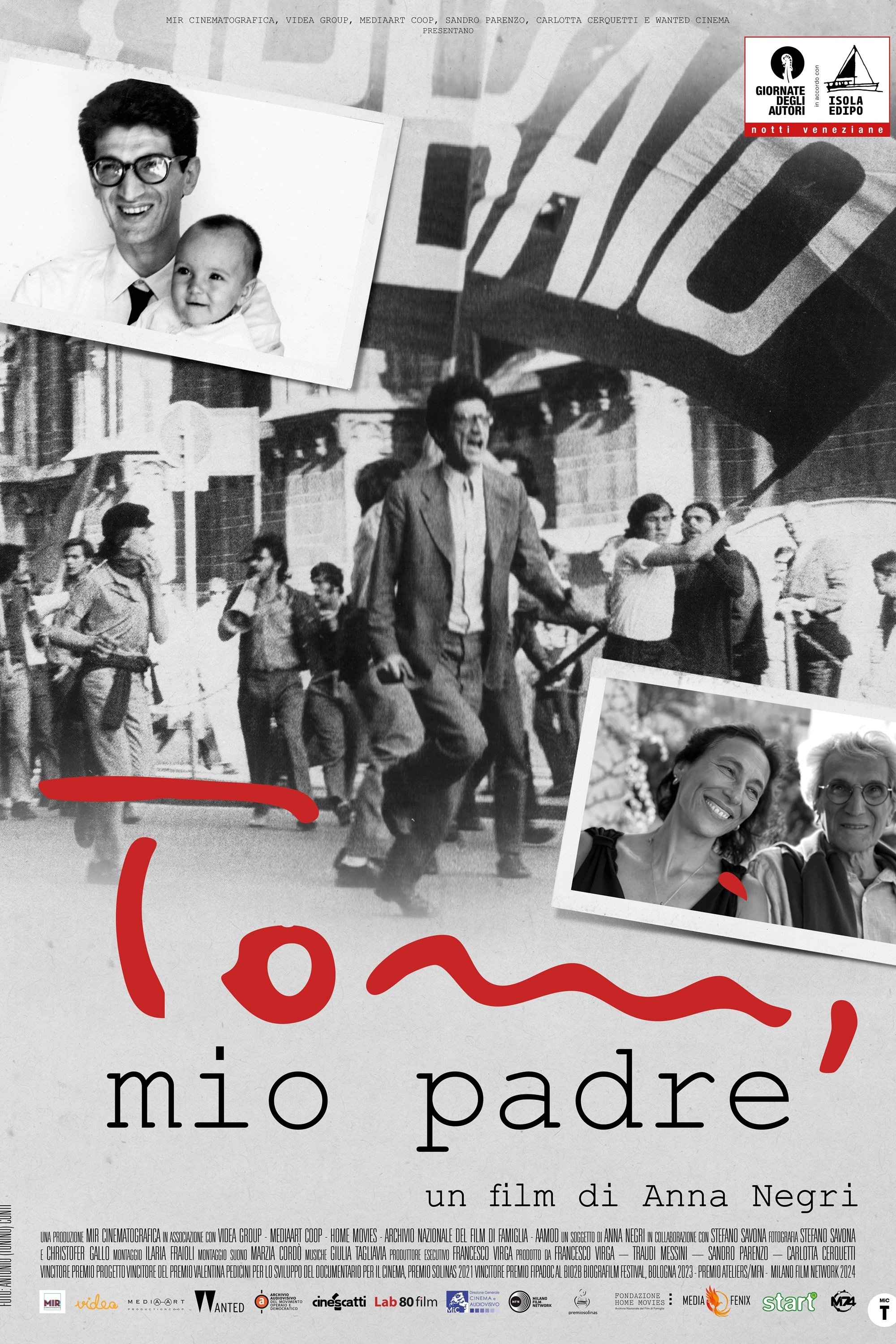
When Anna was fourteen years old, her father was arrested and accused of being the secret head of Italian terrorism, charges of which he would be acquitted, years later. After four years in prison and fifteen in exile, Toni Negri became a world-class political philosopher, and his arrest merely one chapter in an extraordinary life. On Anna, though, that story left an indelible impression, and this film becomes a tale of the traumas of two generations, both personal and collective. Anna and Toni meet up in Venice, in front of a film camera, a friend of theirs doing the filming. Toni knows it will be his last time in Venice – and dies six months later. Anna, who has never lived with her father since his arrest, now tries to make up for lost time. And it is in this new dimension of a voyage of mutual discovery that we witness, as conveyed in a few gestures and choice words, any last doubts and misconceptions fade away, and the real meaning of two such complicated lives become clear.
Diziler1
 DiziBelgesel
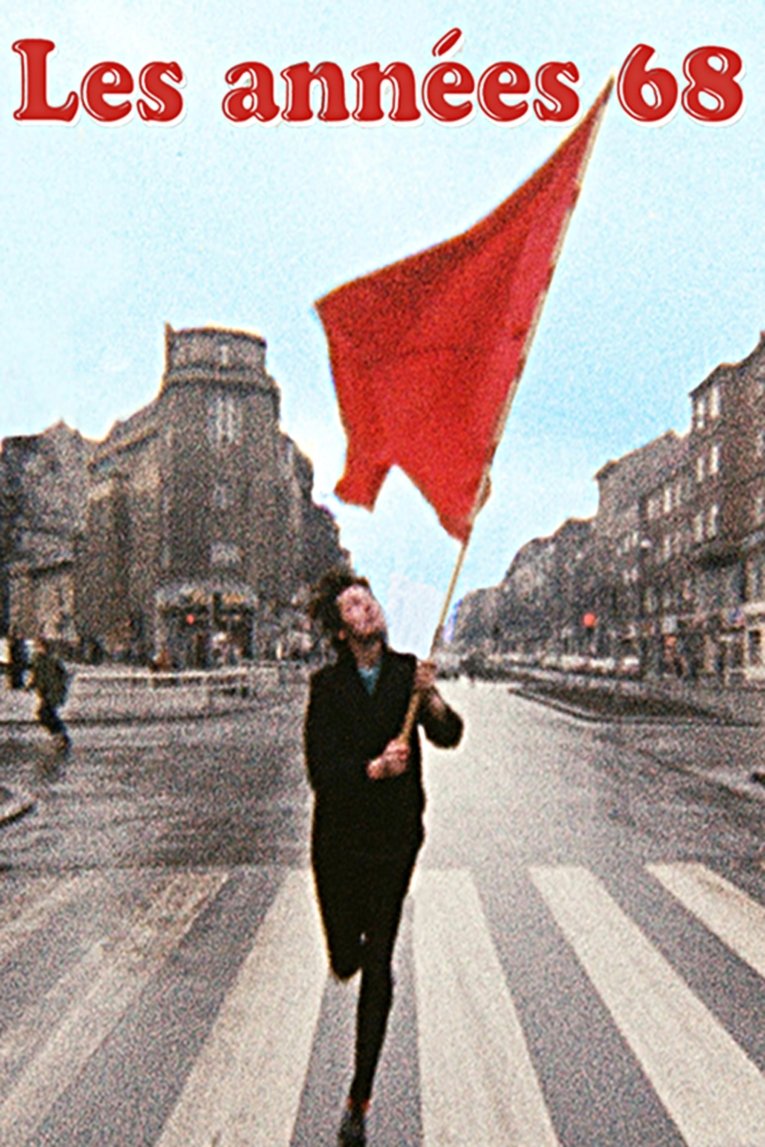
In 1968, young people from Berkeley to Paris and from Prague to Tokyo rose up against the world they were being offered. In this sprawling but riveting two-part documentary, veteran filmmaker Don Kent tracks the development, decline and legacy of this global movement against the fiery backdrop of the Vietnam War, civil rights struggles, dueling ideologies, and international coup d’états. A time capsule full of evocative sights and sounds, narrated by leading historians and political activists, Les années 68 effortlessly connects apparently discrete events to form a blazingly timely analysis of a decade that shaped the way we live now.