Alexandra Schmitt
Oyuncu · 1861 – 1938 · Freiburg im Breisgau, Baden-Württemberg, Germany
Alexandra Schmitt was born on 30 January 1861 in Freiburg im Breisgau, Germany. She was an actress, known for Pique Dame (1927), Her Majesty Love (1931) and Mutter Krausens Fahrt ins Glück (1929). She died on 16 February 1941 in Eisenach, Germany.
Filmler8
 FilmDramTarih
English-language, dubbed sound and partly re-edited version of Der Kampf ums Matterhorn. During an early, unsuccessful attempt at climbing the Matterhorn, Edward Whymper finds himself rescued by an italian guide, Jean Antoine Carrel. The two men quickly build a friendship and agree to reach the peak together. However, local villagers plot to divide the alliance of Whymper and Carrel and both men join rival teams as they set out in a race to conquer the mountain. A mountaineering drama based on the novel by Carl Haensel and inspired in the dramatic true story of Edward Whymper, who led the first successful ascent of the Matterhorn in 1865.
 Film10.0Komedi
Fred von Wellingen is a wealthy industrialist, part of a large family-owned corporation. Fred has fallen for Lia, a comely bartender in the Berlin Cabaret. He proposes to her, much to the horror of his family, which considers Lia and her unsophisticated father far below their caste. The family convinces Fred to give up the girl in exchange for increased position and income in the company. But Fred's lapse is momentary, and he again pursues Lia. But she, by this time, has learned of his erstwhile agreement and has agreed to marry someone else.
 Film8.2Dram
Struggle for the Matterhorn (German: Der Kampf ums Matterhorn) is a 1928 German-Swiss silent drama film co-directed by Mario Bonnard and Nunzio Malasomma and starring Luis Trenker, Marcella Albani, and Alexandra Schmitt. The film is part of the popular cycle of mountain films of the 1920s and 1930s. Art direction was by Heinrich Richter. Based on a novel by Carl Haensel, the film depicts the battle between British and Italian climbers to be the first to climb the Matterhorn. Trenker later remade the film as The Challenge in 1938.
- Film7.0DramRomantik
Frühlingsrauschen - Tränen, die ich dir geweint
1929 · 1 votes
 Film6.8Dram
Mutter Krause, her daughter Erna and her son Paul live in a tenement in the poorer section of Berlin's Wedding district. Along with them lives "the Tenant", his soon-to-be bride Friede, who works as a prostitute, and her child whose name isn't revealed in the film. Mutter Krause is a quiet, long-suffering old woman who earns what little she can delivering newspapers. However, Paul is an alcoholic and spends all her money on drink. Mutter Krause can't pay back the money she owes the man whose newspapers she delivered and he accuses her of stealing and threatens her with arrest. Mutter Krause must then pawn her last valuable possession, a treasured memento of her late husband. Paul then breaks into the same pawn shop. He gets away but is later arrested. Meanwhile, Erna begins dating a young man with Communist views, who turns Erna to Communism and also helps her earn the money her mother needs by more honest means.
- Film5.8MaceraDram
Peter Helling, the only survivor of a polar expedition, returns once more to the eternal ice. Why he calls his fate out again, what has happened? At that time he had set out with his best friend Svensson, to search for the missing friend of the woman they both love and for which they fought. In desperation, the men drag through the deep snow and the icy Arctic storms.
Der Ruf des Nordens
1929 · 4 votes
 Film9.0TarihAksiyon
The Queen of Spades or Pique Dame is a 1927 German silent drama film directed by Aleksandr Razumnyj and starring Jenny Jugo, Rudolf Forster and Henri De Vries. It is one of many film adaptations of the Russian writer Alexander Pushkin's 1834 short story The Queen of Spades.
 Film5.6Dram
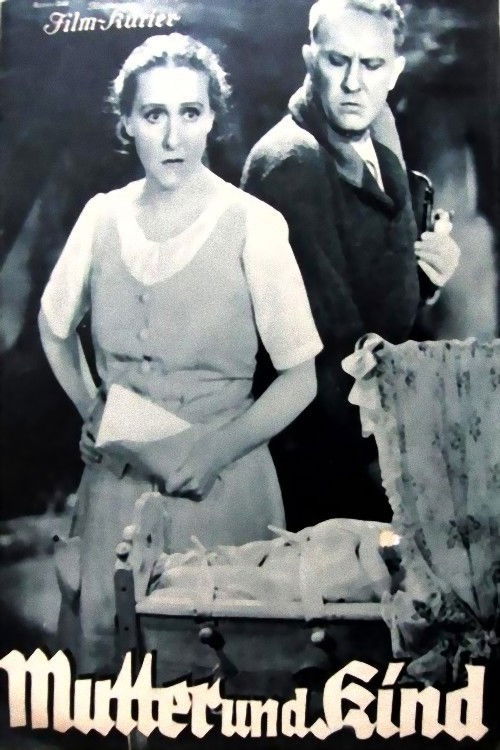
Consul Petersen and his wife are desperate, because they lost their only child and can’t have another. At the same time, the maid Anna is expecting a child, whose father, Jurgen, works in a sawmill. When both of them lose their jobs, they fear they won’t be able to feed the newborn. Thus, they strike a deal with the Petersens, which works for both couples: Anna and Jurgen will receive a farm from the Petersens, free and clear; and the two will allow the Petersens to adopt the child. Anna and Jurgen marry and are quite happy; but when the child is finally born, Anna doesn’t wish to surrender him and flees with the child into the Wattenmeer.